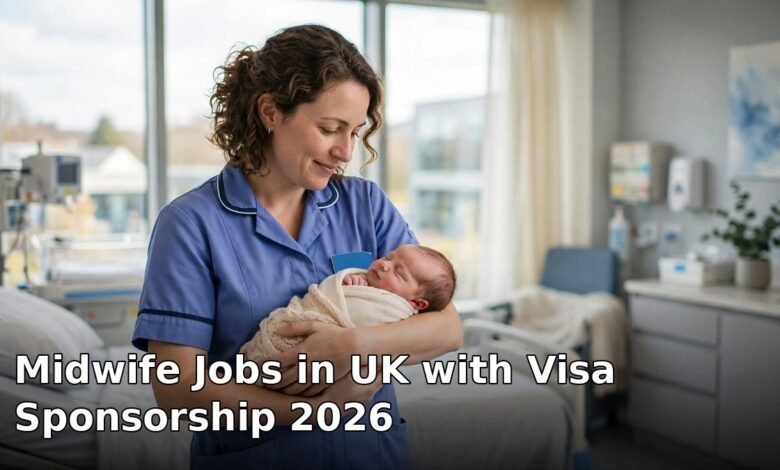
Midwife jobs in UK with visa sponsorship 2026 are one of the most reliable healthcare routes into the UK: NHS trusts hold sponsor licences as standard and actively recruit midwives internationally, with full relocation packages. A current example is a Band 5 Midwife post at Hull University Teaching Hospitals NHS Trust — £28,407–£34,581, with free flight, visa and Certificate of Sponsorship, fully funded OSCE training, and NMC/CBT/IELTS fee reimbursement. This guide covers the NMC registration you must clear first, the Health and Care Worker visa, NHS pay bands, which trusts sponsor, and how to apply.
If you are new to the points-based route, our UK Skilled Worker visa process guide explains the 70-point requirement, the Certificate of Sponsorship, and how the Health and Care Worker subcategory fits in.
What Do NHS Midwives Do?
NHS midwives provide antenatal, intrapartum and postnatal care — supporting women through pregnancy, labour and the early days after birth in midwife-led and consultant-led settings. The Hull University Teaching Hospitals listing used as this post’s benchmark describes a Band 5 role in a maternity service handling over 5,000 births a year, including high-risk and complex pregnancies, working within multidisciplinary teams. The package is what makes international recruitment work: NHS Band 5 salary of £28,407–£34,581, free flight, visa and Certificate of Sponsorship, fully funded OSCE training, reimbursement for NMC, CBT and IELTS/OET fees, pastoral support before and after arrival, and 35 days of annual leave. This is standard practice for NHS international midwifery recruitment, not a one-off perk.
NMC Registration: The Professional Gate Every Midwife Must Clear
You cannot practise as a midwife in the UK without registration with the Nursing and Midwifery Council (NMC) — this is the professional gate, separate from the visa itself. Overseas-trained midwives follow the NMC’s international process: an eligibility and qualification check, the computer-based test (CBT), proof of English at B2 clinical level (IELTS Academic 7.0 overall with no band below 7.0, or OET grade B in all four components), and the OSCE — a practical clinical exam taken in the UK. Most sponsoring trusts fund the OSCE and reimburse your CBT, NMC and English-test fees once you are hired, as the Hull listing shows. Budget 6–12 months for the full NMC journey and start it before you need the visa, because the Certificate of Sponsorship can only follow once registration is secured or near-complete.
Compare with registered nurse jobs in UK with visa sponsorship 2026 — the RN route shares the NMC and Health and Care Worker pathway.
Explore care worker jobs in UK with visa sponsorship 2026 if your background is in care rather than registered midwifery.
See healthcare assistant jobs in UK with visa sponsorship 2026 for a lower-barrier NHS entry route.
Read the UK Skilled Worker visa process to understand the 70-point system behind the Health and Care Worker subcategory.
The Health and Care Worker Visa for Midwives
Midwives enter the UK on the Health and Care Worker visa, a dedicated subcategory of the Skilled Worker visa created for NHS and social care staff. It carries the same rights — dependants, a route to Indefinite Leave to Remain — but with significantly reduced visa fees and an exemption from the Immigration Health Surcharge, which saves sponsored families thousands of pounds. Your NHS trust must hold an active sponsor licence and issue a Certificate of Sponsorship specifying your role, salary and employment duration. The salary must meet the NHS Agenda for Change Band 5 or Band 6 going rate, which both comfortably exceed the visa’s general salary minimum. English at B2 level (the same IELTS/OET evidence used for NMC registration) satisfies the visa’s language requirement too.
NHS Pay Bands and Which Trusts Sponsor Midwives
Sponsored midwives are paid on the NHS Agenda for Change scale, which is national and transparent: Band 5 (newly qualified and internationally recruited midwives) earns £28,407–£34,581, while experienced Band 6 midwives earn £38,682–£46,580. On top of salary, international packages typically include the flight, visa fees, OSCE training, fee reimbursements and pastoral support seen in the Hull listing. Essentially every NHS hospital trust holds a sponsor licence, but prioritise trusts with active international midwifery recruitment programmes — they have dedicated pastoral teams, OSCE preparation and cohort onboarding, which is the difference between a smooth arrival and a lonely one. Job adverts on NHS Jobs frequently state sponsorship eligibility explicitly, as the benchmark adverts do.
How to Apply for Midwife Jobs in UK with Visa Sponsorship in 2026
First, get your NMC eligibility process underway and book your English test — trusts will not issue a Certificate of Sponsorship without registration in hand or clearly in progress. Then apply through official channels: NHS Jobs (jobs.nhs.uk) and Trac.jobs are where trusts advertise, and filters let you find roles stating visa sponsorship eligibility. Prepare a UK-format CV (two pages, no photo), your midwifery qualification certificates, licence/registration from your home country, reference letters confirming at least 12 months of acute maternity experience, and a valid passport. Expect a video interview focused on clinical scenarios and safeguarding. Once offered, the trust issues your Certificate of Sponsorship and you apply for the Health and Care Worker visa online — decisions typically take around three weeks from outside the UK. Never pay anyone for a Certificate of Sponsorship.
Apply Now
Employer: Hull University Teaching Hospitals NHS Trust – Hull, East Yorkshire (recruiter post via Techwaka; states “Visa Sponsorship: YES – Includes flight, visa, and full relocation support”)
Frequently Asked Questions
Which UK visa covers midwife jobs with sponsorship?
The Health and Care Worker visa, a subcategory of the Skilled Worker route for NHS and social care roles. It has lower fees than the standard Skilled Worker visa and exempts you from the Immigration Health Surcharge.
Do I need NMC registration to work as a midwife in the UK?
Registration with the Nursing and Midwifery Council (NMC). Overseas-trained midwives go through the NMC’s overseas process: eligibility check, computer-based test (CBT), English language evidence (IELTS Academic 7.0 overall / OET grade B), and the OSCE practical exam in the UK.
What salary do sponsored midwives earn in the NHS?
NHS midwives are paid on the Agenda for Change scale: Band 5 is £28,407–£34,581 and Band 6 (experienced/specialist) is £38,682–£46,580. Both comfortably exceed the Health and Care Worker salary minimum.
Which NHS employers sponsor midwives?
Virtually all NHS hospital trusts hold sponsor licences and many run international midwifery recruitment with relocation packages. Apply via NHS Jobs or Trac.jobs, and confirm the advert states visa sponsorship eligibility before investing effort.
Midwife jobs in UK with visa sponsorship 2026 are one of the most dependable healthcare routes into the UK — NMC registration is a defined process, NHS trusts sponsor internationally as standard practice, and the Health and Care Worker visa keeps costs down. Get your NMC and English evidence ready, target trusts with international recruitment programmes, and apply through official channels. The demand for midwives is not going away.