Farm worker jobs in Australia with visa sponsorship 2026 are genuinely available — but only through the right scheme for your nationality. The PALM scheme (Pacific Australia Labour Mobility) lets approved employers bring Pacific island and Timor-Leste nationals for harvest and farm work, with the employer covering airfare and visa costs; short-term placements run up to 9 months and long-term up to 4 years. Young travellers from eligible countries use the Working Holiday visas (417/462) instead. The benchmark source for this guide is RWM Group’s live PALM recruitment page — an approved PALM employer placing farm hands, fruit pickers and packers, livestock workers, horticulture specialists and machine operators Australia-wide, with the employer arranging and covering travel costs and handling all visa paperwork. This guide lays out both routes honestly — including who does NOT qualify — plus regions, award pay and how to apply safely.
New to Australia’s visa system? Start with the official scheme pages and our farm worker jobs in Canada with visa sponsorship 2026 comparison to see how the two countries’ farm routes differ.
What Does Farm Work in Australia Actually Involve?
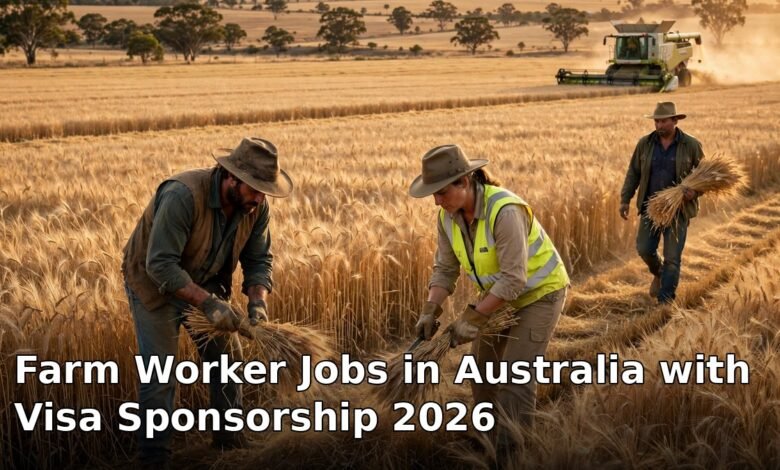
Australian farm work spans fruit picking and packing (mangoes, bananas, citrus, berries), vegetable harvesting, grain harvest support, cotton, dairy and livestock handling. The benchmark source used for this guide is RWM Group’s PALM recruitment page (updated 2026-09-24): an approved employer recruiting farm hands, fruit pickers and packers, livestock workers, horticulture specialists and machine operators Australia-wide, offering the standard PALM package — hourly pay under the Horticulture Award, accommodation assistance, and employer-arranged and covered travel costs with all visa paperwork handled. The work is physical — early starts, outdoor conditions, piece-rate or hourly pay — and employers value reliability and fitness over formal qualifications. Most roles need no prior experience, but a driver’s licence and basic English significantly widen your options.
The PALM Scheme: The Real Route for Farm Worker Jobs in Australia with Visa Sponsorship
The PALM scheme (Pacific Australia Labour Mobility) is the dedicated, government-run route for farm labour — and it is nationality-restricted to Pacific island countries and Timor-Leste. Under PALM, only approved employers can hire you; the employer covers your international airfare and visa costs, provides or arranges accommodation, and you work under Australian workplace law with award wages. The short-term stream runs up to 9 months (ideal for harvest seasons); the long-term stream runs up to 4 years for meat processing, agriculture and related sectors. Here is the honest framing this post is built on: PALM is NOT open to every nationality. If you are not from an eligible Pacific nation or Timor-Leste, PALM is not your route — full stop.
Compare the Canadian option in our farm worker jobs in Canada with visa sponsorship 2026 guide.
Also see farm worker jobs in UK with visa sponsorship 2026 for the UK seasonal worker route.
Livestock background? Read beef farm worker jobs in Australia for station and feedlot roles.
Hospitality alternative: cleaner jobs in Australia with visa sponsorship 2026 covers another common WHM job.
If You Are Not PALM-Eligible: The Working Holiday Alternative
Not PALM-eligible? The realistic alternative is the Working Holiday Maker program: subclass 417 (Working Holiday) and subclass 462 (Work and Holiday), open to young travellers (usually 18–30, up to 35 for some countries) from eligible partner countries. WHM holders can do farm and harvest work anywhere in Australia, and specified regional work can even earn you a second and third year. What you should NOT expect: a general employer-sponsored farm visa open to all nationalities — Australia does not run one. Anyone online selling “guaranteed farm work visas” to applicants outside the PALM and WHM systems is selling a scam. Match your nationality to the real scheme, or do not apply at all.
Where and When: Harvest Regions and Award Pay
Harvest demand follows the seasons: Queensland’s mango and banana harvests, Victoria’s summer fruit, the Riverina’s citrus and vegetables, Western Australia’s grain harvest. The benchmark Queensland listing used here hires through the approved-employer system with pay under the Horticulture Award — always check your pay against the award, because underpayment in horticulture is the industry’s known problem and the Fair Work Ombudsman publishes the exact rates. Accommodation is typically arranged by the employer (often deducted from wages at regulated rates), and transport to remote farms matters — a licence helps enormously. Time your application 2–3 months before your target harvest.
How to Apply for Farm Worker Jobs in Australia with Visa Sponsorship 2026
First, confirm your scheme: PALM-eligible nationalities apply through their country’s PALM labour unit or directly to approved employers listed on the official PALM employer directory; WHM travellers apply for subclass 417/462 first, then hunt harvest jobs on arrival. Build a simple one-page résumé (fitness, any farm or physical work, licence status, English level) — farm employers skim, they do not read essays. Apply directly to growers and labour-hire firms approved under PALM, or use the Harvest Trail channels for WHM work. Never pay recruitment fees: under PALM the employer pays your airfare and visa by law, and charging workers for placement is illegal. Arrive with the right visa already granted, keep copies of your employment contract, and know the Fair Work Ombudsman’s number before you start.
Apply Now
Employer: RWM Group — PALM scheme approved employer (recruitment page via rwmgroup.com.au, updated 2026-09-24; employer arranges and covers travel costs and handles all visa requirements)
Apply NowFrequently Asked Questions
What is the main visa scheme for farm workers in Australia?
The PALM (Pacific Australia Labour Mobility) scheme, for nationals of Pacific island countries and Timor-Leste. Approved employers cover your airfare and visa costs; the short-term stream runs up to 9 months and the long-term stream up to 4 years.
Can anyone apply for the PALM scheme?
No — this is the critical honesty point. PALM is restricted to Pacific island and Timor-Leste nationals. If you are from elsewhere, the realistic routes are the Working Holiday visas (subclass 417/462, age- and country-restricted) or employer-nominated skilled streams if you qualify.
Which Australian regions hire the most harvest workers?
Harvest work is concentrated in Queensland (Mango and banana regions), Victoria (fruit and vegetable belts), New South Wales (Riverina), and Western Australia (wheatbelt and horticulture). Seasonality matters — apply 2–3 months before the harvest window for your target crop.
Should I pay an agent for farm work placement in Australia?
Yes — and the law backs you up. Under PALM, the approved employer pays for your flights and visa. Any agent asking YOU to pay recruitment, visa or flight fees for farm work is running a scam — report them.
Farm worker jobs in Australia with visa sponsorship 2026 are real — but only through the right door. If you are a Pacific islands or Timor-Leste national, the PALM scheme is purpose-built for you, with airfare and visa costs on the employer. If you are a young traveller from an eligible country, the Working Holiday visa is your route into harvest work. What does not exist is an open-to-everyone farm visa — anyone selling you one is selling a scam. Pick the scheme that matches your nationality, apply through approved employers, and 2026’s harvest regions will have work waiting.