Electrician jobs in USA with visa sponsorship 2026 are real — but only through the honest routes, and this guide names them plainly. State licensing is the mandatory gate (every state licences separately, with an NEC exam), and the two realistic visa paths are H-2B for project or seasonal work and EB-3 for the multi-year employer-sponsored green card. H-1B does not apply to trade electricians — any site claiming otherwise is misleading you. Typical sponsored pay runs $50,000–$85,000, and commercial or industrial experience is what employers actually sponsor. Note on sourcing: no single live H-2B electrician listing could be verified at write time — licensed journeyman H-2B orders are rare because US states require local licensing, and the only real orders found were expired. The figures in this guide reflect typical H-2B project terms and Department of Labor prevailing-wage data. Here is the full honest breakdown: licences, both real visa routes, wages, and how to apply.New to US work visas? The key distinction is temporary vs permanent — H-2B fits project electricians while EB-3 is the green-card path. Compare with the trade route in plumber jobs in USA with visa sponsorship 2026.
What Do Electricians Do on US Commercial Sites?
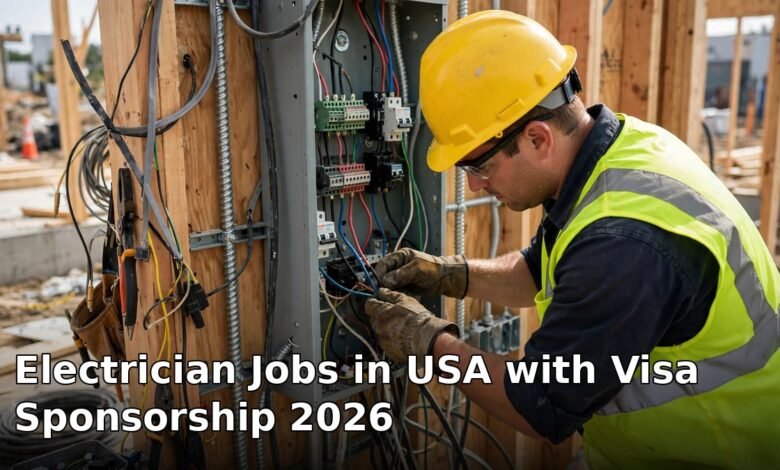
US electricians install, maintain and repair electrical systems across residential, commercial and industrial sites — running conduit, pulling wire, terminating panels, troubleshooting controls, and working to the National Electrical Code. Typical H-2B project postings for commercial electricians advertise in the $60,000s with overtime — helper-class orders are more common than licensed journeyman orders, because state licensing gates the trade. Commercial and industrial experience is the currency that matters: employers hiring internationally want electricians who have run large conduit, worked from schematics on live commercial sites, and can document 3–5 years of it. Residential-only handyman experience is a much harder sell for sponsorship.
Licences, H-2B and EB-3: The Real Framework for Electrician Jobs in USA with Visa Sponsorship
The state licence is the gate nobody can skip: every US state licences electricians independently, and the requirements — documented work hours, a journeyman exam on the National Electrical Code, sometimes state-specific business law — differ everywhere. You cannot legally perform electrical work without the licence for your work state, and no visa fixes that. Research your target state’s licensing board early: some states offer reciprocity or exam pathways for experienced foreign electricians, others require US-documented hours first. Parallel to licensing, the two honest visa routes are H-2B and EB-3. H-2B is temporary and employer-driven: the contractor must prove a temporary need (a project, a season) and obtain a temporary labour certification — it fits project electricians, not permanent relocation. EB-3 is the permanent route: the employer files PERM labour certification proving no qualified US worker is available, then sponsors your green card — a multi-year process for a permanent outcome. And the line this post draws clearly: H-1B does not apply to trade electricians. It is a specialty-occupation visa requiring degree-level work; any site listing H-1B as an electrician route is misleading you.Compare the UK trade route in our electrician jobs in London with work visa sponsorship guide.
Also see electrician jobs in Canada with visa sponsorship 2026 for the LMIA-based alternative.
Trades cluster: plumber jobs in USA with visa sponsorship 2026 (day-9) covers the parallel H-2B trade route.
Project workers: aircraft mechanic jobs in USA with visa sponsorship 2026 (day-10) is another skilled-trade H-visa case study.
Salary Benchmarks: $50k–$85k and the Prevailing Wage Rule
Sponsored electricians typically earn $50,000–$85,000 a year, with commercial and industrial roles at the upper end, union and prevailing-wage project work higher still, and residential service at the lower end. For H-2B, the offered wage must meet the prevailing wage for the occupation in the area of employment — the Department of Labor publishes these figures, and the employer’s petition lives or dies on them. Typical commercial project postings sit in the low $60,000s plus overtime, consistent with prevailing-wage project rates. Benchmark every offer against the DOL prevailing wage for your county and occupation level; an offer far below it cannot support the petition.
Which US Contractors Can Actually Sponsor Electricians?
Target electrical contractors with a history of H-2B filings (project-based commercial, industrial shutdown and turnaround work) or employers willing to run the PERM process for EB-3 (larger contractors, industrial facilities, utilities). Check the employer’s track record: DOL disclosure data shows which companies have filed H-2B or PERM petitions before — a contractor that has done it for electricians knows the paperwork and timelines. Staffing agencies operate heavily in this space; legitimate ones are paid by the employer, and any agent or “consultant” asking you for visa fees, placement fees or “processing” charges is running a scam. US law puts H-2B recruitment costs on the employer.
How to Apply for Electrician Jobs in USA with Visa Sponsorship 2026
First, pick your target state and read its licensing board requirements — document your hours, gather employer letters verifying commercial/industrial experience, and start any exam preparation. Build a US-format résumé (one to two pages, no photo) that leads with systems and scale: voltages worked, conduit runs, project types, years on commercial sites. Apply to contractors with H-2B or PERM track records and state your licence plan and experience plainly in the first contact — sponsors screen for immigration realism early. For H-2B, timing follows the employer’s project and the visa cap calendar; for EB-3, expect the PERM process to run 18–30+ months before the green card stage. Do not chase H-1B postings, do not pay anyone for a job offer, and keep every promise benchmarked against the prevailing wage. The honest path is paperwork-heavy — but it is the path that works.
Frequently Asked Questions
Which US visas can sponsor electricians?
The realistic routes are H-2B (temporary, project or seasonal work — the employer must prove temporary need) and EB-3 (permanent, employer-sponsored green card via the multi-year PERM labour certification process). H-1B does NOT apply to trade electricians — it requires a bachelor’s-level specialty occupation.
Do I need a US state licence to work as an electrician?
Yes — and this is the gate most overseas applicants underestimate. Every state licences electricians separately, usually requiring documented hours, an exam on the National Electrical Code (NEC), and sometimes a journeyman period. No licence, no legal electrical work — sort the target state’s requirements before anything else.
What salary do electricians earn in the USA?
Typically $50,000–$85,000 a year, with commercial and industrial electricians at the higher end and residential service work lower. Union and prevailing-wage project work can exceed this range; always check the Department of Labor wage data for your work location.
Should I pay an agent to get me an electrician job in the USA?
No — this is a scam marker. Legitimate US employers pay all H-2B petition and recruitment costs themselves. Anyone asking you for visa, placement or “processing” fees is running a fraud.
Electrician jobs in USA with visa sponsorship 2026 are real but narrow — and honesty about the routes is what separates a workable plan from a wasted year. The state licence is the gate, H-2B covers project and seasonal work, EB-3 is the long game to a green card, and H-1B simply does not apply to trade electricians. Get licensed-state-ready, document 3–5 years of commercial or industrial experience, target contractors who have filed H-2B or PERM before, and never pay for a job offer. The honest route is slower than the fantasy — but it is the one that actually ends with you working in the US.