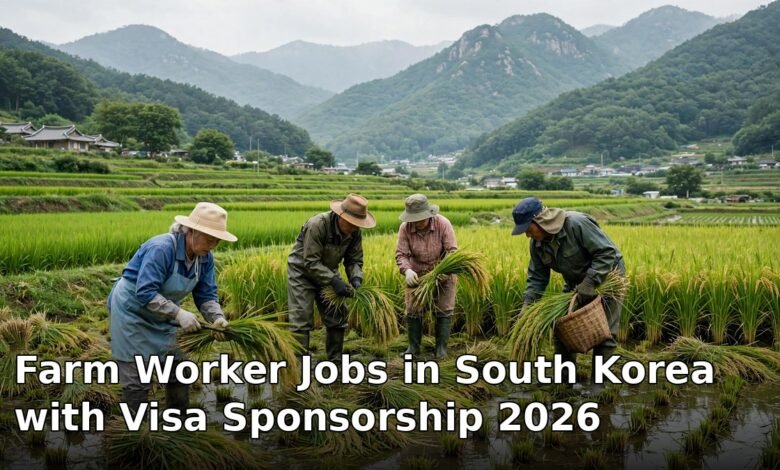
Farm worker jobs in South Korea with visa sponsorship 2026 come with two real routes, and this guide keeps them separate: the EPS E-9 visa for agriculture and livestock — 1,906 permits in the 2026 fourth intake round — is the genuine route for multi-year farm employment, with the same government-run EPS-TOPIK, roster and employer-tied mechanics as manufacturing; the E-8 seasonal visa (up to 8 months, local-government-run, no Korean test) is the honest alternative for genuinely seasonal work. Both run through the government — never a private agent. This guide lays out both visas without conflating them, the pay, and the scam warnings.
Start with the route overview in our South Korean work visa for job seekers guide — it frames where the E-9 fits.
What Farm Workers Do in South Korea (and What It Pays)
In South Korea the E-9 farm worker works in agriculture and livestock: crop cultivation and harvesting, greenhouse work, livestock care and feeding, and farm maintenance on small family-scale operations. The sector’s scale is real but concentrated: the 2026 fourth EPS round allocated 1,906 agriculture permits, and the rules allow small farms (10 or fewer workers) to hire up to 5 foreign workers each. Pay follows Korean minimum-wage law plus overtime, with accommodation typically provided on or near the farm — E-9 agriculture wages in 2026 generally land around KRW 2.1-2.4 million per month including overtime. The honest market note: this is outdoor physical work in all seasons on small rural employers, and because each farm hires only a few workers, the employer’s reliability — housing, pay practices, working hours — is the single most important variable. There is no large corporate HR department to appeal to.
The Real Route: EPS E-9 Agriculture/Livestock (and the Honest E-8 Alternative)
The real route for multi-year farm employment is the EPS E-9 visa in the agriculture/livestock sector. The mechanics mirror the manufacturing route exactly: pass the EPS-TOPIK Korean test in your home country, enter the EPS roster through your country’s government recruitment channel, get selected by a Korean farm employer via HRD Korea, sign the standard employment contract, and receive the E-9 visa before travel. The visa is tied to the sponsoring employer with a maximum stay of 4 years and 10 months. Korea’s official immigration notices confirm the system’s government-only character — seasonal and E-9 applications run through the EPS portal and employment centers, never private agents. Pakistan’s EPS partnership covers this route the same as manufacturing.
Understand the wider market in jobs in South Korea with visa sponsorship for foreigners.
Read our South Korean work visa jobs overview of every Korean work route.
Compare the manufacturing route in our welder jobs in South Korea with visa sponsorship 2026 guide.
E-9 vs E-8: Two Visas, Never Conflated
This is the distinction most guides blur, so it gets its own section: the E-8 seasonal work visa is the honest alternative for genuinely seasonal work — up to 8 months, run by local governments (not the EPS roster), and with no Korean language test. It suits workers who want a single season, not multi-year employment. The E-9 is the multi-year route with the test, the roster and the 4-year-10-month horizon. Never conflate them: they have different application channels, different durations and different rules, and an agent selling you ‘E-9 seasonal work’ is mixing two visas into one fiction. A further accuracy point from Korea’s official notices: seasonal E-9 workers can earn additional points toward later skilled-worker (E-7-4) consideration — but that is a downstream possibility, not a promise.
The Qualification Bar and Arrival Formalities
The qualification bar for E-9 agriculture: a passed EPS-TOPIK, physical fitness for outdoor farm labour, and a clean record — farm experience strengthens roster selection but the test result is the primary filter. For E-8 seasonal work: no Korean test, but you must fit the local government’s seasonal program criteria and timing. On arrival for E-9: MOEL post-arrival training, alien registration within 90 days, and enrolment in the standard insurance package (national pension, health insurance, departure guarantee, return-cost insurance). Practical preparation: understand rural Korean living conditions before you commit — small-farm placements are remote by nature — and confirm housing, working hours and pay terms through the official channel before departure.
How to Apply for Farm Worker Jobs in South Korea with Visa Sponsorship 2026
Start at the official EPS portal linked below — HRD Korea’s website carrying the program’s procedures, requirements and notices. Then find your country’s government EPS recruitment channel and register for the next EPS-TOPIK round if you want the multi-year E-9 route, or research your local government’s seasonal worker program timing for the E-8. Prepare for the Korean test seriously — it is the E-9 gate. Never pay anyone for a job offer, a roster spot, or visa ‘processing’ outside the official channel; Korean law forbids private E-9 recruitment, and fees to agents are the signature of this market’s scam economy. Verify everything against the EPS website and Korea’s official immigration portal — not social media posts.
Apply Now
Employer: HRD Korea (EPS program, official government portal)
Frequently Asked Questions
What is the difference between the E-9 and E-8 visas for farm work?
The E-9 is the multi-year Employment Permit System visa (up to 4 years 10 months, employer-tied, EPS-TOPIK required, entry via the government roster). The E-8 is a seasonal work visa of up to 8 months, run by local governments for genuinely seasonal agricultural work, with no Korean language test. They are different visas with different rules — any guide or agent that mixes them up is unreliable.
Do I need the Korean language test for farm work?
Yes. The EPS-TOPIK Korean test is mandatory for the E-9 route, including the agriculture and livestock sector. The E-8 seasonal visa does not require the Korean test — that is one of its defining differences. Choose the route first, then prepare accordingly.
How many foreign workers can a Korean farm hire?
Small farms with 10 or fewer workers may hire up to 5 foreign workers under the EPS agriculture rules. This is why the E-9 agriculture intake numbers look small next to manufacturing — the sector is made of small employers, each hiring a handful of workers. It also means your relationship with that one small employer matters enormously.
Can I enter on a tourist visa and switch to a farm work visa?
No. As with the manufacturing route, there is no tourist-visa-to-E-9 conversion. The E-9 agriculture visa is issued only through the EPS roster process before travel, and the E-8 seasonal visa is arranged through the local-government seasonal worker program. Anyone advising a tourist-visa shortcut is misinformed or running a scam.
Farm worker jobs in South Korea with visa sponsorship 2026 come with two honest routes, and this guide refuses to conflate them: the EPS E-9 agriculture/livestock visa — 1,906 permits in the 2026 fourth round — is the real route for multi-year farm employment, with the same EPS-TOPIK, roster and employer-tied mechanics as the manufacturing route; the E-8 seasonal visa (up to 8 months, local-government-run, no Korean test) is the honest alternative for genuinely seasonal work. Both run through the government. Never pay a private agent for either, never attempt a tourist-visa conversion, and start with the official EPS portal above.


