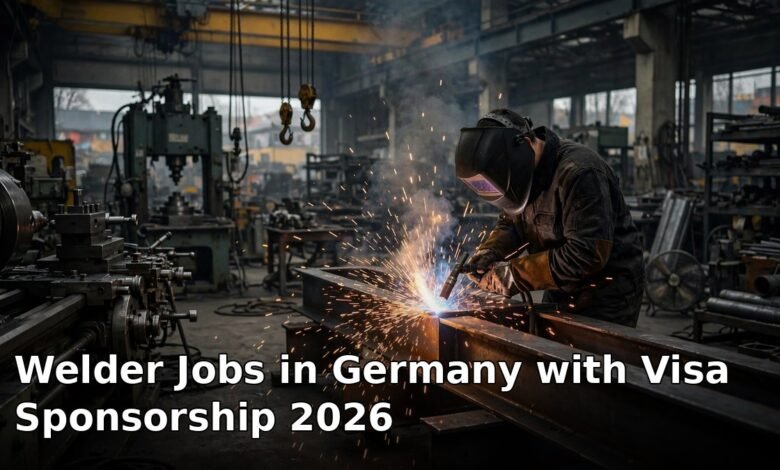
Welder jobs in Germany with visa sponsorship 2026 are a genuinely open route for certified tradespeople: under the Skilled Immigration Act, 2+ years of welding experience can substitute for formal recognition in this non-regulated occupation, and the recognition partnership (Anerkennungspartnerschaft) lets your employer start the visa process before your German recognition is finished — with A2 German and the employer’s written agreement. Manufacturing and machine-building hubs in Baden-Württemberg and NRW report very high demand. A note on sourcing: no German employer listing states explicit “visa sponsorship” wording for welders — German law has no employer-sponsorship concept; the worker applies for the residence permit with the contract. Current vacancies open to international applicants are posted on the federal government’s official make-it-in-germany.com Jobbörse, and the salary figures in this guide reflect metalworking collective-agreement rates. This guide covers the partnership mechanic, salary benchmarks, sponsoring employers, and how to apply.
New to Germany’s system? The recognition partnership is the key mechanic — the same one explained in our plumber jobs in Germany with visa sponsorship 2026 guide. Read both if you are choosing between trades.
What Do Welders Do in German Manufacturing?
German welders work in machine building, automotive supply, steel construction, shipbuilding and plant engineering — MIG/MAG, TIG and electrode welding on structural steel, pressure vessels, pipelines and precision components. The benchmark listing used for this guide is a full-time MIG/MAG welder role with a Baden-Württemberg metalworking firm stating visa support for qualified international welders, paying in the mid-€40,000s plus shift allowances. Employers expect a completed trade qualification (or equivalent documented experience), valid welding certifications for the processes used, ability to read technical drawings, and — on most ads — German at A2–B1. Coded-welding certificates (EN 9606) are a major advantage.
Skilled Immigration Act and Recognition Partnership: The Route for Welder Jobs in Germany with Visa Sponsorship
The Skilled Immigration Act provides the legal route, with the same two mechanics that make the plumber route work: for non-regulated occupations like welding, 2+ years of relevant professional experience can substitute for formal recognition of a foreign qualification, and the recognition partnership (Anerkennungspartnerschaft) allows the employer to begin your visa process before recognition is complete. The partnership requires the employer’s written commitment and, in practice, German at A2 level. ITI/diploma/trade certificates plus two or more years of documented welding experience is the profile German employers and immigration offices expect to see. Like plumbing, welding is federally non-regulated, so the partnership mechanic applies without the extra licensing layers that regulated professions face.
Same German route, different trade: plumber jobs in Germany with visa sponsorship 2026 (day-11) uses the identical recognition-partnership mechanic.
Compare the UK trade route in our welder jobs in UK with visa sponsorship 2026 guide (day-6).
Also see welder jobs in Australia with visa sponsorship 2026 (day-9) for the points-tested alternative.
Germany cluster: mechanical engineer jobs in Germany with visa sponsorship 2026 (day-3) covers the EU Blue Card engineering route.
Salary Benchmarks: €38k–€55k and the Metalworking Tariff
Experienced welders typically earn €38,000–€55,000 a year, with TIG specialists, coded welders (pressure vessels, pipelines) and shift or offshore-adjacent roles above that. The metalworking and electrical industries’ collective agreements set regional minimums that differ by Bundesland — benchmark against the tariff, not a national average. Typical MIG/MAG welder roles with Baden-Württemberg metalworking firms pay in the mid-€40,000s plus shift allowances, consistent with experienced rates in the southwest. For the residence permit, your employment must be qualification-appropriate; offers far below the tariff suggest an employer unfamiliar with the process.
Which German Manufacturing Employers Can Actually Sponsor Welders?
Target machine-building firms, automotive suppliers, steel-construction companies and plant-engineering contractors — concentrated in Baden-Württemberg, North Rhine-Westphalia and Bavaria, where demand is highest. The employers that genuinely sponsor are those that understand the recognition partnership: ask whether they have hired welders internationally under the Skilled Immigration Act and whether they will sign the Anerkennungspartnerschaft — serious sponsors answer immediately. Trade recruitment agencies operate in this sector; legitimate ones are paid by the employer, and anyone charging you placement or visa fees is running a scam.
How to Apply for Welder Jobs in Germany with Visa Sponsorship 2026
First, assemble your file: translated trade certificates, EN 9606 or equivalent welding certifications, and employer letters documenting 2+ years of welding by process (MIG/MAG, TIG, electrode). Start German immediately — A2 is the floor for the partnership and most ads want A2–B1; workshop safety makes this non-negotiable. Build a German-format CV (tabular Lebenslauf) listing processes, materials, thicknesses and certifications — German hiring managers read welding CVs technically. Apply to manufacturers stating visa support or international recruitment, naming the Skilled Immigration Act and recognition partnership in your cover letter. Once offered, the employer signs the partnership and you apply for the skilled-worker residence permit at the German mission. German industry’s order books reward certified welders — make 2026 the year.
Frequently Asked Questions
Which German law covers welder immigration?
Germany’s Skilled Immigration Act. Welding is a non-regulated occupation, so 2+ years of relevant experience can substitute for formal recognition, and the recognition partnership lets the employer start your visa before recognition finishes.
How does the recognition partnership work for welders?
The Anerkennungspartnerschaft: you and your German employer jointly pursue recognition after your arrival while you work. It needs the employer’s written agreement and usually A2-level German — it removes the old wait-for-recognition-first bottleneck.
What salary do welders earn in Germany?
Typically €38,000–€55,000 a year for experienced welders, with TIG specialists, coded welders and shift-work roles higher. Collective agreements in metalworking set regional minimums — check the tariff for your Bundesland.
How much German do I need as a welder?
Usually A2–B1. A2 is the practical minimum for the recognition partnership; most job ads ask for A2–B1, and workshop safety depends on understanding instructions — employers take this seriously.
Welder jobs in Germany with visa sponsorship 2026 are a real, rules-based route — the Skilled Immigration Act’s recognition partnership means your visa can move before your German recognition is complete, as long as you bring 2+ years of welding experience, A2–B1 German and an employer willing to sign the partnership. Target machine-building and manufacturing employers in Baden-Württemberg, NRW and Bavaria, get your certificates translated early, and treat German as part of the trade. The order books in German industry are full — 2026 is a strong year to make this move.


