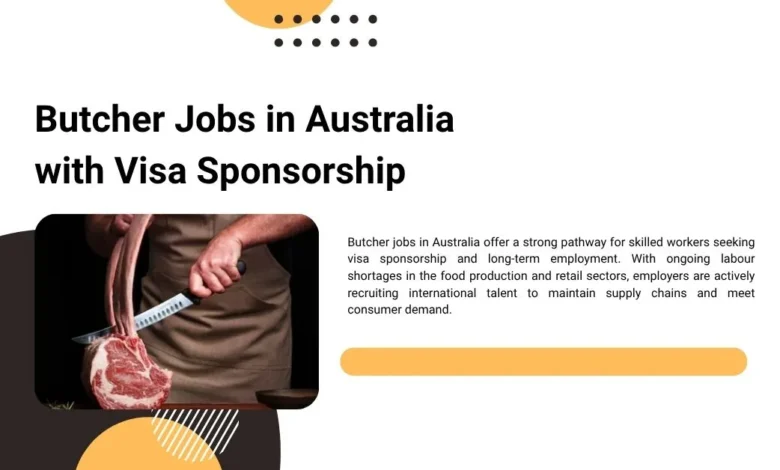
Butcher Jobs in Australia with Visa Sponsorship attract foreign applicants because employers in this field do hire from abroad — but only through a genuine employer offer. In Australia, sponsorship usually means an employer nominating a worker for an employer-sponsored visa, with the employer offer and nomination coming first. The visa application follows the offer, and you should never pay an agent for the offer itself. Contracts, salary and housing terms should be confirmed in writing before you travel. Pay, hours and benefits vary widely by employer, region and experience, so headline figures in adverts should never be taken as a promise. This guide sets out the honest route, the qualifications employers usually ask for, and how to apply without paying for a job offer.
A related opening to compare is Butcher Jobs in Australia with Visa Sponsorship 2026.
A skilled trade can open doors across the world; butcher jobs in Australia are doing exactly that. With rising demand across supermarkets, meat processors, and specialty shops, experienced workers are being welcomed with real opportunities.
Imagine earning between AUD 3,700 and AUD 5,000 per month, working in a structured, professional environment, and building a life in one of the world’s most sought-after destinations. It’s not just about cutting meat; it’s about turning your skills into a long-term career with stability and growth.
Why Are Butcher Jobs in Australia in High Demand?
Australia’s food production and retail sectors are expanding due to population growth and increased meat consumption. This has created labor shortages in butcher shops, supermarkets, and meat processing plants.
In our experience, regional areas and large processing facilities struggle the most to find skilled butchers, which is why many employers now offer visa sponsorship.
For a neighbouring option in the same field, see Butcher/Meat Preparation Jobs in Australia For Foreigners.
What Does a Butcher Do?
Butchers prepare, process, and sell meat products while ensuring hygiene and safety standards.
Core Responsibilities
- Cutting, trimming, and deboning meat
- Preparing portions and specialty cuts
- Operating meat processing equipment
- Maintaining hygiene and food safety standards
- Assisting customers with product selection
Key Industry Entities
- Tools: knives, saws, grinders
- Equipment: meat slicers, refrigeration units
- Products: beef, lamb, poultry, processed meats
- Standards: food safety regulations, hygiene compliance
Types of Butcher Jobs in Australia:
- Retail Butchers
- Working in butcher shops and supermarkets
- Customer interaction and product display
- Meat Processing Workers
- Large-scale meat production
- Packaging and processing lines
- Specialty Butchers
- Preparing premium or custom meat cuts
- Working in gourmet or high-end shops
- Regional Processing Roles
- Jobs in rural or regional facilities
- Often offer stronger visa sponsorship options
Visa Sponsorship for Butcher Jobs:
Australian employers sponsor foreign workers through programs managed by the Department of Home Affairs (Australia).
How Visa Sponsorship Works
- The employer offers a job contract
- The employer nominates the role
- The candidate applies for a visa.
- Approval allows legal work and residence
Types of Work Visas
- Temporary Skill Shortage Visa (Subclass 482): Most common route
- Skilled Employer-Sponsored Regional Visa (Subclass 494): For regional jobs
- Working Holiday Visa (Subclass 417/462): Limited temporary work option
- Skilled Migration Pathways: For long-term residency
Check Also: Jobs in England for Foreigners with Visa Sponsorship
Eligibility Criteria for Applicants:
To qualify for butcher jobs:
- Age: 18+
- Education: Trade certification preferred
- Experience: 1–3 years in butchery or meat processing
- Language: Basic to intermediate English
- Physical Fitness: Ability to handle demanding tasks
- Police Clearance: Required
- Job Offer: Mandatory for visa sponsorship
Required Documents Checklist:
Prepare these documents before applying:
- Valid passport (12–18 months validity)
- Updated CV/resume
- Job offer/contract
- Trade certificates (if available)
- Police clearance certificate
- Medical certificate (if required)
- Proof of English proficiency (if requested)
- Reference letters
Salary Expectations:
Butcher salaries in Australia are competitive and skill-based:
| Role | Salary |
|---|---|
| Hourly Wage | AUD 23 – AUD 32 |
| Weekly Pay | AUD 920 – AUD 1,280 |
| Monthly Salary | AUD 3,700 – AUD 5,000 |
Highly skilled or supervisory butchers can earn higher wages depending on expertise and location.
Benefits of Butcher Jobs in Australia:
- High earning potential for skilled trades
- Strong worker protections and labor laws
- Paid leave and overtime benefits
- Opportunities for skill development
- Stable, year-round employment
- Pathways to permanent residency
How to Apply for Butcher Jobs in Australia:
Step-by-Step Application Process
- Prepare CV & documents: Highlight butchery skills and experience
- Search Job Opportunities: Use job portals, supermarket websites, and recruiters
- Apply Online: Submit tailored CV and cover letter
- Attend Interview: Be ready to demonstrate technical knowledge
- Receive Job Offer: Employer provides sponsorship contract
- Visa Nomination: Employer submits nomination
- Apply for Work Visa: Submit application with documents
- Processing Time: Usually several weeks
- Travel & Start Work: Begin your job in Australia
Conclusion:
Butcher Jobs in Australia with Visa Sponsorship 2026 are a genuine route abroad when the offer is real and the sponsorship route is the country’s normal employer-led one. Verify the employer, confirm the contract in writing, and never pay for a job offer — then apply through proper channels with documents you can prove.
Applicants also compare 5-Year Australia Work Visa With Family – Subclass 494 Visa.
How Visa Sponsorship Works for Butcher Jobs in Australia with Visa Sponsorship
Frequently Asked Questions:
How does visa sponsorship work for butcher jobs in australia with visa sponsorship?
In Australia, sponsorship usually means an employer nominating a worker for an employer-sponsored visa, with the employer offer and nomination coming first. The visa application follows the offer, and you should never pay an agent for the offer itself. The employer offer comes first; the visa or permit application follows it, and you should never pay an agent for the offer itself.
What qualifications or experience do employers usually ask for?
It depends on the role: skilled and regulated roles need recognised qualifications and relevant experience, while entry-level roles emphasise reliability, basic language skills and a clean record. Employers value verifiable references and any role-specific certificates over generic claims.
What pay and working conditions should I realistically expect?
Pay varies by employer, region, hours and experience, and advertised figures are often the top of a wide range rather than a starting salary. Check whether housing, meals, transport or overtime are included, and confirm salary, hours and contract terms in writing before you travel.
How do I apply safely and avoid job-offer scams?
Apply through the employer’s own channels or a verifiable recruiter, confirm the company and the visa route independently, and never pay a fee for a job offer, visa guarantee or sponsorship. Genuine employers do not sell offers, and pressure to pay quickly is a warning sign.
For the next step, read our guide to Accountant Jobs in Australia with Visa Sponsorship 2026.
Keep an eye on Accounting Assistant Jobs in Australia 2026 – Apply Now.