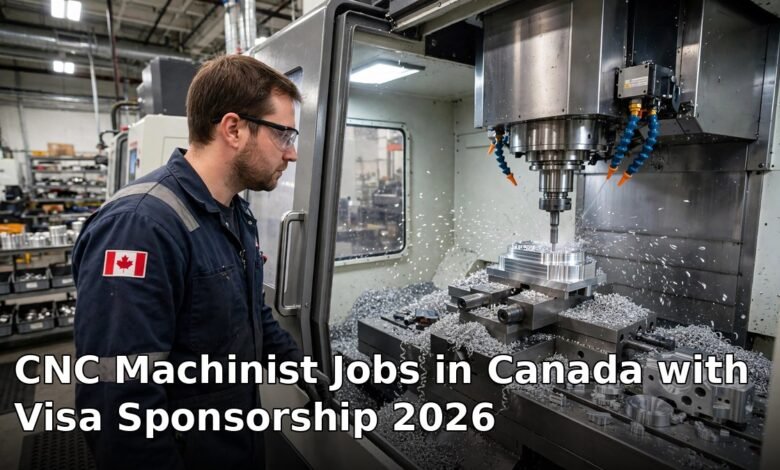
CNC machinist jobs in Canada with visa sponsorship 2026 are a solid, LMIA-driven route for skilled tradespeople: Machinist is a Red Seal trade, manufacturers in Ontario, Quebec and Alberta actively drive LMIA approvals, and experienced machinists earn CAD $28–$40 per hour. A live example is a precision machinist role at Dumaine Precision inc. in Chambly, Quebec — permanent, full-time, and explicitly LMIA-approved. This guide covers the Red Seal trade, how LMIA sponsorship works, wages, which manufacturers sponsor machinists, and how to apply.
New to Canada’s sponsorship system? Read best companies LMIA work visa jobs in Canada first — it explains how the LMIA process works and which employers use it.
What Do CNC Machinists Do in Canadian Manufacturing?
CNC machinists set up, program and operate computer numerically controlled machine tools — mills, lathes, machining centres — to produce precision parts to tight tolerances from engineering drawings. The benchmark listing used in this guide is a precision machinist role at Dumaine Precision inc. in Chambly, Quebec: a permanent, full-time position (40 hours a week) at $20–$25 per hour whose duties include reading blueprints, computing dimensions and tolerances, verifying parts with micrometers and calipers, and operating conventional and CNC machine tools. Critically, the listing states the position has been approved by the LMIA — meaning the employer has already cleared the labour-market test and can support a foreign worker’s work permit. Note its honest requirements too: French fluency and a Registered Apprenticeship certificate, which tells you Quebec shops expect real credentials.
The Red Seal Trade and the Immigration Angle
Machinist is a Red Seal trade in Canada — the interprovincial Red Seal endorsement is the national standard that proves your competence to employers and immigration officers alike. It is not legally mandatory to work as a machinist in most provinces, but holding it (or being clearly on the path to it) dramatically strengthens both job applications and immigration cases, and it gives you mobility across provinces. For immigration, machinists are Express Entry–eligible under the Federal Skilled Trades Program once they hold qualifying skilled work experience and language test results, and the trade features in several Provincial Nominee Program streams in manufacturing provinces. Foreign credential recognition takes time and money — start it early through newcomer services and the provincial apprenticeship authority where you plan to work.
Compare with electrician jobs in Canada with visa sponsorship 2026 — another Red Seal trade with LMIA routes.
See plumber jobs in Canada for foreigners visa sponsorship for a related sponsored trade.
Browse construction electrician jobs in Canada for more trade opportunities.
Understand the sponsorship mechanics in best companies LMIA work visa jobs in Canada before you apply.
Wages and the LMIA: How Sponsorship Actually Works
Experienced CNC machinists typically earn CAD $28–$40 per hour — about CAD $58,000–$83,000 a year at full-time hours — with Ontario, Quebec and Alberta manufacturing hubs at the top of the range and tool-and-die specialists earning more. The benchmark Chambly listing advertises $20–$25 per hour, which reflects a precision machinist role open to apprenticeship holders; use the $28–$40 band as your target once experienced. On the sponsorship mechanics: the employer’s LMIA approval is the expensive, time-consuming part that many firms will not do for a single hire — which is exactly why an LMIA-approved listing like the benchmark is gold. Your part is the work permit application to IRCC (biometrics, medical, police clearances), plus an Educational Credential Assessment and language test if you are also building an Express Entry profile.
Which Canadian Employers Sponsor CNC Machinists?
The employers that drive LMIA sponsorship for machinists are manufacturers with chronic skilled-trade shortages: automotive and aerospace suppliers (Magna International, Linamar and peers), precision machine shops, and industrial equipment makers, concentrated in Ontario, Quebec and Alberta. Prioritise employers that state LMIA approval in the advert — like the benchmark Dumaine Precision listing — because it proves they have done the sponsorship paperwork before. Search the official Job Bank (jobbank.gc.ca) with LMIA filters, manufacturer careers pages, and reputable recruiters in the skilled trades. Be realistic about requirements: Quebec shops commonly expect French, and apprenticeship certificates or equivalent documented training are the norm — generic “CNC operator” experience without setup and programming skills will not clear the bar.
How to Apply for CNC Machinist Jobs in Canada with Visa Sponsorship in 2026
Prepare a machinist’s CV that reads like a setup sheet: machines and controls you have run (Fanuc, Siemens, Haas), materials, tolerances held, programming (G-code, CAM software), and measurement tools mastered — shops hire on specifics, not adjectives. Gather reference letters, apprenticeship or training records, and any trade certificates. Apply directly to the benchmark-style LMIA-approved listings by email with a tailored cover letter, and simultaneously to manufacturers’ careers pages. In interviews — often by video — be ready to talk through setups, programming decisions and how you hold tight tolerances. Once offered, the employer finalises the LMIA (or uses an existing approval) and you apply for the work permit; in parallel, create an Express Entry profile and explore PNP streams so the temporary job becomes a permanent-residence pathway. Never pay anyone for an LMIA or a job offer.
Apply Now
Employer: Dumaine Precision inc. – Chambly, QC (listing states the precision machinist position “has been approved by the LMIA”; apply by email with cover letter)
Frequently Asked Questions
How do foreign CNC machinists get work permits in Canada?
Usually through the Temporary Foreign Worker Program: the employer obtains a positive LMIA, then you apply for an employer-specific work permit. Machinist is also Express Entry–eligible under the Federal Skilled Trades Program once you have qualifying experience and language scores.
What is the Red Seal for machinists?
Canada’s interprovincial Red Seal endorsement for the Machinist trade. It is not mandatory to practise in most provinces, but it proves your trade to employers and immigration officers and aids interprovincial mobility.
What salary do CNC machinists earn in Canada?
Experienced CNC machinists typically earn CAD $28–$40 per hour — roughly CAD $58,000–$83,000 a year full-time. Ontario, Quebec and Alberta manufacturing hubs pay at the top of the range.
Which Canadian employers sponsor CNC machinists?
Automotive and aerospace manufacturers (Magna International, Linamar and similar), precision machine shops, and industrial equipment makers — especially employers with a track record of LMIA approvals. The benchmark listing’s employer states its machinist position is LMIA-approved.
CNC machinist jobs in Canada with visa sponsorship 2026 are a solid, LMIA-driven route — the Red Seal Machinist trade, real manufacturing demand in Ontario, Quebec and Alberta, and wages of CAD $28–$40 an hour make this one of the more sponsor-friendly skilled trades. Target manufacturers with LMIA history, document your setups and tolerances precisely, and run the Express Entry/PNP track in parallel. The shops that need you are hiring.