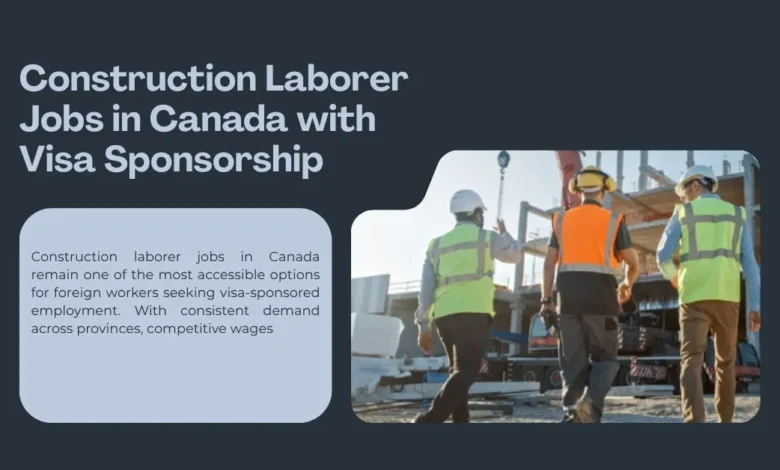
Looking for construction laborer jobs in Canada with visa sponsorship? Canada is actively hiring foreign workers due to ongoing infrastructure growth and labor shortages. With wages up to CAD 4,500/month, legal work permits, and pathways to permanent residence, this is one of the most accessible entry-level job options in Canada.
Why Is Canada Hiring Construction Laborers?
Canada’s construction sector is expanding rapidly across Ontario, British Columbia, Alberta, Quebec, and Manitoba, driven by housing demand and infrastructure upgrades.
Canada is hiring construction laborers because large-scale building projects and worker shortages have created demand for foreign workers, especially in residential, commercial, and infrastructure development.
In our experience, cities like Toronto and Vancouver offer the most consistent opportunities due to continuous urban development.
What Does a Construction Laborer Do?
Construction laborers support skilled trades and ensure site operations run smoothly.
Types of Construction Jobs in Canada
General Laborer
Handles material movement, site cleaning, and basic support tasks.
Concrete & Formwork Worker
Assists with pouring concrete, setting molds, and finishing surfaces.
Material Handler
Loads, unloads, and organizes construction materials and tools.
Site Preparation Worker
Clears land, levels ground, and prepares building zones.
Demolition Assistant
Supports demolition work under supervision.
Roofer / Scaffold Helper
Assists tradespeople working at heights using scaffolding systems.
How Does Visa Sponsorship Work in Canada?
Foreign workers are hired through regulated programs when local labor is unavailable.
Employers sponsor foreign workers through the Temporary Foreign Worker Program (TFWP) by obtaining an LMIA and supporting the worker’s permit application.
Step-by-Step Sponsorship Process
- Employer offers a job contract
- Employer applies for LMIA (Labour Market Impact Assessment)
- Candidate applies for a work permit
- Visa approval allows legal work in Canada
What Visa Options Are Available?
Temporary Foreign Worker Program (TFWP)
Main route for employer-sponsored construction jobs.
Provincial Nominee Program (PNP)
Allows provinces to nominate workers for permanent residence.
Canadian Experience Class (CEC)
For workers already in Canada with at least 1 year of experience.
Who Can Apply? (Eligibility Criteria)
Construction labor jobs are beginner-friendly.
Basic Requirements
- Age: 18+
- Education: Not required
- Experience: 0–3 years preferred
- Language: Basic English (or French in Quebec)
- Physical fitness: Required
- Clean record: Police clearance
- Job offer: Mandatory for sponsorship
Required Documents for Canada Work Visa
Prepare the following:
- Valid passport (12–18 months)
- Passport-size photos
- Updated CV / resume
- Job offer letter
- LMIA number (from employer)
- Police clearance certificate
- Medical certificate (if required)
How Much Do Construction Workers Earn in Canada?
Salary Breakdown (2026)
- Hourly Wage: CAD 18 – CAD 28
- Weekly Pay: CAD 720 – CAD 1,120
- Monthly Salary: CAD 2,800 – CAD 4,500
Higher wages are common in cities like Calgary and Surrey, where construction demand is strong.
What Are the Benefits of Working in Canada?
1. Competitive Pay
Wages meet or exceed national labor standards.
2. Legal Worker Protection
Includes:
- Overtime pay
- Workplace safety laws
- Health coverage
3. Career Growth
Opportunities to become:
- Skilled tradesperson
- Equipment operator
- Site supervisor
4. Immigration Opportunities
Experience can lead to permanent residence through PNP or CEC.
5. Multicultural Workplaces
Construction teams include workers from multiple countries.
How to Apply for Construction Laborer Jobs in Canada
Step-by-Step Process
Step 1: Prepare Your CV
Highlight physical work or construction experience.
Step 2: Search Jobs
Use:
- Job boards
- Recruitment agencies
- Employer websites
Step 3: Apply Online
Submit your application and mention visa sponsorship.
Step 4: Interview
Employers may conduct phone or video interviews.
Step 5: Receive Job Offer
Employer provides contract and starts LMIA process.
Step 6: Apply for Work Permit
Submit application with LMIA and documents.
Step 7: Wait for Approval
Processing takes a few weeks.
Step 8: Travel & Start Work
Begin your job after visa approval.
Common Challenges
Weather Conditions
Canada has cold winters proper clothing is essential.
Language Barriers
Basic English improves safety and communication.
Physical Demands
Prepare physically before starting work.
Conclusion
Construction laborer jobs in Canada offer a real opportunity for foreign workers to earn, gain experience, and potentially settle long-term. With visa sponsorship, strong demand, and clear immigration pathways, this is one of the most practical routes to start working in Canada
Frequently Asked Questions
1. Do I need experience for construction jobs in Canada?
No, many roles are entry-level, but experience increases your chances.
2. Is visa sponsorship guaranteed?
No, but many employers offer it through LMIA if they cannot find local workers.
3. How long does the LMIA process take?
Typically 2–3 months depending on employer and province.
4. Can I get permanent residence later?
Yes, through programs like PNP or Canadian Experience Class.