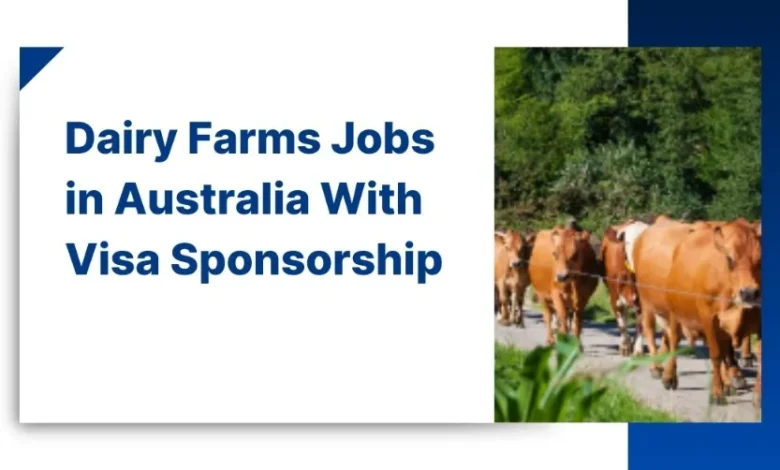
Dairy Farms Jobs in Australia attract foreign applicants because employers in this field do hire from abroad — but only through a genuine employer offer. In Australia, sponsorship usually means an employer nominating you under an employer-sponsored visa such as the Skills in Demand visa, with occupation lists, salary thresholds and English requirements to meet. Lower-skilled roles have fewer sponsored routes, so an employer’s approved nomination matters more than any advert’s wording. Pay, hours and benefits vary widely by employer, region and experience, so headline figures in adverts should never be taken as a promise. This guide sets out the honest route, the qualifications employers usually ask for, and how to apply without paying for a job offer.
A related opening to compare is Dairy Farming Jobs in Australia With Visa Sponsorship 2026.
Some careers begin in offices. Others begin before sunrise, surrounded by open land, fresh air, and honest work. In 2026, dairy farm jobs in Australia with visa sponsorship continue to attract foreign workers looking for stability, decent pay, and a fresh start.
With hourly wages ranging from AUD 22 to AUD 30+, plus on-the-job training and often free or subsidized accommodation, these roles are built for people who value hard work over titles. You don’t need a degree. You don’t need perfect English. You need reliability, physical strength, and the willingness to learn.
For many, dairy farming in Australia becomes more than just a job; it’s a long-term opportunity to earn well, live simply, and build a future in one of the world’s most stable countries.
Read Also: Australian Dairy Farm Jobs With Visa Support
Why Australia Needs Dairy Farm Workers
Australia is a leading global dairy exporter. Its vast industry, spanning thousands of farms, relies on a steady workforce for daily operations like milking and animal care. However, a declining local interest in rural work and an aging workforce have created a persistent gap.
To address this, Australian farmers are increasingly utilizing government-approved visa programs to sponsor international workers. Demand remains strong, particularly in the key dairy states of Victoria, Tasmania, and New South Wales.
What You’ll Do on a Dairy Farm
For a neighbouring option in the same field, see Australia 476 Work Visa 2026.
This is hands-on, physical work set in some of Australia’s most beautiful rural landscapes. It’s structured and essential and often provides a strong sense of routine and accomplishment.
Core responsibilities include:
- Milking: Operating milking machinery and ensuring herd health protocols.
- Feeding & Nutrition: Preparing and distributing feed and water for the herd.
- Animal Care: Monitoring cattle health, assisting with calving, and treating minor ailments.
- Cleaning & Maintenance: Sanitizing milking equipment, maintaining sheds and yards, and ensuring high hygiene standards.
- General Farm Duties: Fencing, machinery operation, pasture management, and record-keeping.
Work is often split into early morning and afternoon shifts aligned with milking times, requiring reliability and stamina.
Who Can Apply?
Formal qualifications are typically not required. Employers prioritize attitude, physical capability, and reliability.
Key eligibility criteria:
- Age: Generally 21–45 years old (the preferred range for most visa sponsorships).
- Health & Fitness: Capable of sustained physical labor in various weather conditions.
- Language: Functional English skills for understanding safety instructions and team communication.
- Character: A clean police record and willingness to undergo a medical check.
- Mindset: Adaptability, a strong work ethic, and comfort living in a rural community.
Prior experience with animals or machinery is advantageous but not always mandatory, as comprehensive on-farm training is usually provided.
Visa Sponsorship Pathways
For international candidates, the primary visa options are:
- Temporary Skill Shortage (TSS) Visa (Subclass 482): The most common route. An approved employer sponsors you for up to 4 years in a nominated role (e.g., dairy cattle farmer). This visa can sometimes lead to permanent residency.
- Skilled Employer Sponsored Regional (SESR) Visa (Subclass 494): For roles in designated regional areas, offering a pathway to permanency after 3 years.
- Pacific Australia Labour Mobility (PALM) Scheme: For citizens of participating Pacific Island countries and Timor-Leste, facilitating temporary agricultural work.
Your sponsoring employer will guide you through the specific application process after a job offer is made.
Salary & Benefits of Dairy Farms Jobs in Australia
Remuneration is fair and reflects the essential nature of the work, with added benefits that reduce living costs.
- Hourly Wages:
- Entry-Level / Farm Hand: AUD $23 – $27 per hour
- Experienced Dairy Farm Worker/Milker: AUD $25–$30+ per hour
- Supervisor/Manager: AUD $30–$40+ per hour
- Overtime: Paid at higher rates for weekend, holiday, or extra hours, especially during peak periods.
- Key Benefits:
- Subsidized or free on-farm accommodation (a significant financial benefit).
- Utilities (often included).
- Work Uniforms and Personal Protective Equipment (PPE).
- Sponsorship of required work visas.
- Access to training and potential for career progression.
Where Are the Jobs Located?
Dairy farms are located in regional and rural areas, offering a tranquil lifestyle away from major cities.
High-demand regions include:
- Victoria: Australia’s dairy heartland, particularly Gippsland and the South-West.
- Tasmania: Renowned for its high-quality, pasture-based dairy operations.
- New South Wales: The South Coast and Riverina regions.
- South Australia & Queensland: Smaller but significant industries offering year-round work.
Accommodation is typically provided on or near the farm, ranging from private units to shared houses.
How to Apply for Dairy Farms Jobs in Australia
1. Prepare Your Documents:
- A clear CV/resume highlighting physical work, reliability, teamwork, and any relevant experience.
- Passport copy.
- Reference letters (if available).
- Prepare for a police check and medical exam later in the process.
2. Search Strategically on Job Platforms:
Use keywords like:
- “Dairy farm visa sponsorship Australia
- “Dairy cattle farmer 482 visa”
- “Farm work Australia sponsored”
Recommended platforms:
- Seek.com.au
- Indeed.com.au
- AgriLabour (specialist agricultural recruitment)
- The National Farmers’ Federation Job Board
- LinkedIn (set location to Australia)
3. Apply & Interview:
Submit tailored applications. If shortlisted, expect a phone or video interview to discuss your suitability and understanding of the role.
4. Receive Offer & Begin Visa Process:
Upon receiving a formal job offer, your employer will initiate the sponsorship process. You will then apply for your visa with their support.
Conclusion
Dairy farm jobs in Australia in 2026 offer a practical and proven route for foreign workers seeking visa sponsorship and steady income. The work is physical, and the hours can be early, but the rewards are real: competitive wages, low living costs, and valuable experience in Australia’s agricultural sector.
With strong demand across Victoria, Tasmania, and New South Wales, employers are actively welcoming international workers. If you’re ready for honest work, outdoor living, and long-term potential, Australia’s dairy farms could be the opportunity that changes your direction
How Visa Sponsorship Works for Dairy Farms Jobs in Australia
Applicants also compare Australia Construction Visa Subsidy Program.
How does visa sponsorship work for dairy farms jobs in australia?
In Australia, sponsorship usually means an employer nominating you under an employer-sponsored visa such as the Skills in Demand visa, with occupation lists, salary thresholds and English requirements to meet. Lower-skilled roles have fewer sponsored routes, so an employer’s approved nomination matters more than any advert’s wording. The employer offer comes first; the visa or permit application follows it, and you should never pay an agent for the offer itself.
What qualifications or experience do employers usually ask for?
It depends on the role: skilled and regulated roles need recognised qualifications and relevant experience, while entry-level roles emphasise reliability, basic language skills and a clean record. Employers value verifiable references and any role-specific certificates over generic claims.
What pay and working conditions should I realistically expect?
Pay varies by employer, region, hours and experience, and advertised figures are often the top of a wide range rather than a starting salary. Check whether housing, meals, transport or overtime are included, and confirm salary, hours and contract terms in writing before you travel.
How do I apply safely and avoid job-offer scams?
Apply through the employer’s own channels or a verifiable recruiter, confirm the company and the visa route independently, and never pay a fee for a job offer, visa guarantee or sponsorship. Genuine employers do not sell offers, and pressure to pay quickly is a warning sign.
For the next step, read our guide to Electrician Jobs in Australia with Visa 2026 – Hiring Now.
Keep an eye on Australia Partner Visa Fee 2026.