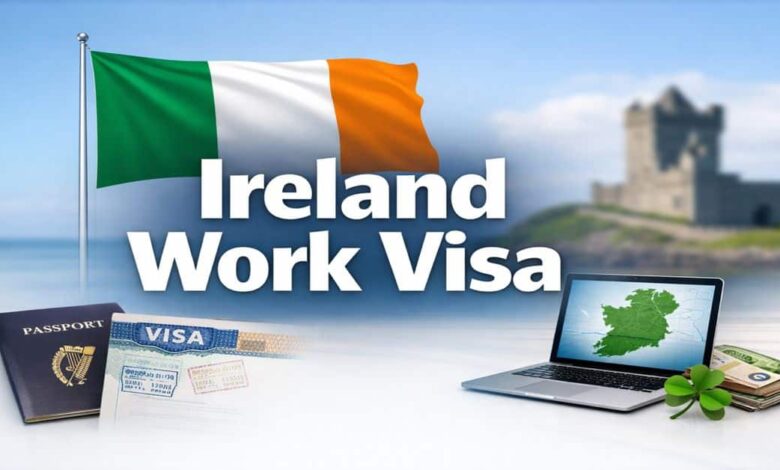
Ireland’s Department of Justice has published an updated 2026 documents checklist for work visa (Employment Visa) applicants, covering 12 mandatory items from your DETE employment permit and passport to six-month bank statements and a signed application letter. Missing or incomplete paperwork is the top reason for delays and refusals — use the full checklist below to get your application right the first time.
If you’re weighing alternatives, compare this route with our guide to skilled worker shortages in Europe.
People looking for Irish visas, pay attention! If you want to apply for an Employment Visa in 2026, the Irish government just posted an updated list of documents that you must have in order to avoid delays or being turned down. Read on for a full breakdown of what you need to do and how to make sure the visa application process goes smoothly.
New Mandatory Checklist for Ireland Employment Visa:
The following documents are now required to be submitted by visa applicants when submitting an employment visa application in Ireland, per the Department of Justice:
The paperwork needed to apply for an employment visa has been amended by the Irish Department of Justice as of 2026. The required checklist is as follows:
1. Application Form
- Fully completed, signed, and dated.
2. Employment Permit
- Issued by the Department of Enterprise, Trade, and Employment (DETE).
3. Passport & Previous Passports
- Current passport (must be valid).
- All past travel history must be included.
4. Employer’s Letter from Ireland
- Should contain information regarding your new position, pay, and any accommodations you may have been given.
5. Previous Visa Refusal Details
- Provide all relevant information and supporting documentation if you have previously had a visa denied.
6. Two Recent Passport-Sized Photographs
- Must adhere to Ireland’s official requirements for visa photos.
7. Visa Fee Payment Proof
- Make sure the payment is completed and appropriately recorded.
8. Residency Card (if applicable)
- Provide a copy of your residency card if you currently have a resident permit in another nation.
9. Evidence of Qualifications and Work Experience
Provide proof of your professional background, including:
- the last three pay stubs.
- Your personal bank account has been credited with salary payments.
- A letter of employment from your present employer.
- Individual tax returns.
- Credentials for training or professions.
10. Application Letter
A signed and dated letter explaining why you want to move to Ireland. It must include:
- Your complete name, mailing address, and phone number.
- A promise to adhere to all visa requirements.
- A declaration attesting to your refusal to rely on public services or become a financial burden on the government.
- a promise to depart Ireland prior to the expiration of your visa.
11. Employment Contract
Must clearly outline:
- Your new job details.
- Salary information.
- Accommodation details (if provided by the employer).
12. Financial Proof
- Send in a current, comprehensive six-month bank statement.
- Is authentic and printed on letterhead from the bank.
- includes your address and full name.
- Displays a clear six-month transaction history.
- explains any significant changes in funds.
Read Also: Ireland Work Visa Process
What This Means for New Irish Employment Visa Applicants?
A solid work history, financial stability, and a promise to return home in the event that the visa expires are highlighted in these changes. Before submitting, applicants should make sure all of their paperwork is to prevent needless delays in processing.
Conclusion:
The new Ireland Employment Visa requirements for 2026 place a strong emphasis on job experience, financial stability, and adherence to visa rules. To guarantee a smooth approval process, applicants should carefully study and submit all required documentation. You can improve your chances of getting an employment visa in Ireland by planning ahead and according to the checklist.
Frequently Asked Questions:
What is the Ireland Employment Visa?
After receiving an employment permit from the Department of Enterprise, Trade, and Employment (DETE), foreign nationals can work lawfully in Ireland using the Ireland Employment Visa.
Do I need an employment permit before applying for the visa?
Yes, an employment permit from DETE is mandatory before applying for the employment visa.
Ireland work visa documents 2026: Requirements & Eligibility
Applicants exploring this option often also read our guide on countries with the fastest work visa processing.
What documents are required for the Ireland Employment Visa in 2026?
Ireland’s Department of Justice now requires a completed application form, an employment permit from DETE, a valid passport with travel history, an employer letter, two passport photos, visa fee proof, six-month bank statements, an employment contract, qualifications evidence, and a signed application letter.
Do I need an employment permit before applying for an Irish work visa?
Yes. You must first secure an employment permit from Ireland’s Department of Enterprise, Trade and Employment (DETE) before submitting your visa application. The visa application cannot proceed without it, so apply for the permit through your Irish employer as the first step.
How much financial proof is needed for an Ireland work visa?
You must provide a current six-month bank statement printed on official bank letterhead showing your full name, address, and a clear transaction history. Any large or unusual deposits must be explained. Strong, stable finances show you can support yourself without relying on Irish public services.
Do previous visa refusals affect my Ireland work visa application?
You must disclose all previous visa refusals with full details and supporting documents. Hiding a refusal can lead to an automatic denial, while honest disclosure with context gives the officer a complete picture. Always include refusal letters and explain clearly what has changed since then.
For a related pathway, see skill shortage occupations in Europe and Asia — requirements, costs and timelines explained.





4 Comments