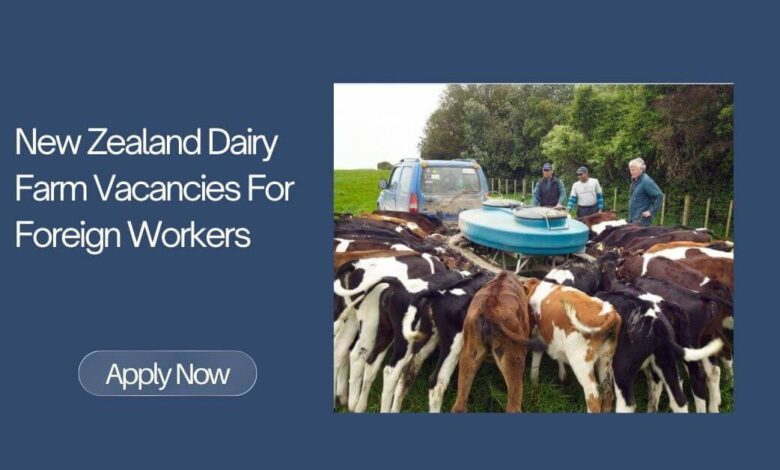
New Zealand Dairy Farm Vacancies For Foreign Workers attract foreign applicants because employers in this field do hire from abroad — but only through a genuine employer offer. In New Zealand, sponsorship usually means an employer with accreditation offering a role under the Accredited Employer Work Visa, with pay-rate and advertising requirements to meet. The employer’s accreditation matters more than any advert’s wording. Pay, hours and benefits vary widely by employer, region and experience, so headline figures in adverts should never be taken as a promise. This guide sets out the honest route, the qualifications employers usually ask for, and how to apply without paying for a job offer.
A related opening to compare is Dairy Farm Workers Jobs in New Zealand 2026 – Apply Now.
New Zealand dairy farm vacancies for foreign workers in 2026 provide an exciting opportunity to work on professional dairy farms while earning a competitive salary. Employees are responsible for daily farm operations including milking, feeding, herd management, and equipment maintenance. International applicants benefit from visa assistance and relocation support, making it easy to start work abroad. Workers enjoy structured schedules, on-the-job training, and performance-based salary increments. This role is perfect for motivated individuals who want hands-on experience in agriculture, stable earnings, and the chance to live in New Zealand’s beautiful countryside while contributing to the dairy industry.
How Visa Sponsorship Works for New Zealand Dairy Farm Vacancies For Foreign Workers
For a neighbouring option in the same field, see Dairy Farm Assistant Jobs in New Zealand 2026 – Apply Now.
Details of New Zealand Dairy Farm Vacancie:
- Job Title: New Zealand Dairy Farm Vacancies For Foreign Workers
- Country: New Zealand
- Education: Diploma
- Experience: 1-3 years
Applicants also compare Cow Farm Worker Jobs in New Zealand 2026.
Requirements:
Most international workers in New Zealand are employed in the dairy industry on farms, but their employment is contingent upon the validity of their work visa. The Essential Skills Work Visa is the most frequently used type of visa and necessitates a position offer from a New Zealand employer. Additionally, it would be imperative to satisfy the necessary personal health, character, and other pertinent criteria, which are stipulated in the New Zealand citizenship application regulations. It is probable that the agricultural sector will inquire about the necessary language proficiency in English, as communication is a ubiquitous requirement.
Benefits:
Making your vocational life on a dairy farm in New Zealand will expose you not only to beautiful nature but also to many other hidden virtues and values. Some of the key advantages include
- Visa Sponsorship:
A majority of dairy farms are from New Zealand and are prepared to sponsor employees with skills from the international market. Thus offering individuals a once-in-a-lifetime chance for work and recreation experience in the country. - Salary and Remuneration:
Salaries in the dairy sector are competitive, highlighting the level of demand generated by working conditions and the necessity of a labor force that is highly skilled in farm homemaking. - Experience and Skill Development:
The environmental exposure and the developing of new skills in the diversified aspects of agriculture like animal husbandry, pasture management, and machinery operation, are what make working on a dairy farm a unique experience and an opportunity to learn. - Immersion in Kiwi Culture:
Living and working in New Zealand allows individuals to immerse themselves in the country’s rich culture and way of life, fostering personal growth and cross-cultural understanding. - Opportunities for Progression:
Milk production not only provides employment but also brings chances for professional growth. This can be achieved by outdoing the colleagues in displaying commitment and expertise and thereby getting a chance to be promoted into supervisory or managerial positions.
Duties on a Dairy Farm:
The chores of a dairy farm in New Zealand are diversified and that depends on the specific positions and the size of the ranch. However, common tasks may include:
- Milking: Supervising the health and safety of all individuals involved in the activity, as well as herding cows and milking them using a variety of modern milking apparatus.
- Animal Care: Collaborating closely with the resident physician and observing animals to ensure their well-being, as well as assisting with calving or reproduction programs.
- Pasture Management: One of the obstacles that arises is the implementation of various strategies, such as grazing rotation, fertilization, and plant control, to ensure that the forage supply and quality are of the highest quality.
- Machinery Operation: The utilization of farm mechanization technologies to perform farm duties, including feeding, fencing, and miscellaneous maintenance.
Types:
- Milkers are responsible for the on-site task of milking cows using clean milking apparatus that is frequently sanitized and milking tasks that adhere to deadlines.
- Farm Assistant: In the presence of farm administrators and owners, farm assistants perform a variety of tasks, including milking, animal care, pasture management, and general farm maintenance.
- Herd Manager: The herd managers are responsible for the welfare and efficiency of the livestock animals, and they achieve that by performing the following duties: Breeding programs and the communication of the animal’s reproduction cycle are overseen, and veterinarian visits are arranged when health concerns arise.
- Farm Manager: In order to ensure the success and sustainability of the dairy farm operation, farm managers are retained to oversee staff recruitment, budgeting, livestock health, and business planning.
Salary Prospects:
Farm incomes for dairy workers in NZ will be determined by many components straight on experience, qualifications, size, and place. Yet the current figures show the annual earnings for stock assistants is between $50,000 to $70,000. Herd managers earn around $70,000 to the magnitude of $90,000 based on their qualifications and duties undertaken. The farms are not only paying hosts to the paid workers but they also offer them accommodation as part of the package for employment.
Check Also: Dairy Farm Worker Jobs in Ireland Visa Sponsorship
How to Apply?
Individuals who select this occupation as they pursue employment opportunities abroad may derive an abundance of fulfillment from their employment on a dairy farm in New Zealand. It is less surprising that an individual may opt to relocate to this hospitable nation if they are a proficient worker who is granted visa sponsorship. In addition to competitive salaries and a plethora of benefits, the rural dairy industry is thriving in the area. Would you like to supervise the entire farm operations, manage livestock colonies, or milk cows? If you are intrigued, the New Zealand dairy industry is the ideal location for you. This is due to the fact that you will not only be in close proximity to nature, but you will also be able to acquire valuable skills that will enable you to succeed in your career. Additionally, you will be part of a dynamic and prosperous agricultural community.
How does visa sponsorship work for new zealand dairy farm vacancies for foreign workers?
In New Zealand, sponsorship usually means an employer with accreditation offering a role under the Accredited Employer Work Visa, with pay-rate and advertising requirements to meet. The employer’s accreditation matters more than any advert’s wording. The employer offer comes first; the visa or permit application follows it, and you should never pay an agent for the offer itself.
What qualifications or experience do employers usually ask for?
It depends on the role: skilled and regulated roles need recognised qualifications and relevant experience, while entry-level roles emphasise reliability, basic language skills and a clean record. Employers value verifiable references and any role-specific certificates over generic claims.
What pay and working conditions should I realistically expect?
Pay varies by employer, region, hours and experience, and advertised figures are often the top of a wide range rather than a starting salary. Check whether housing, meals, transport or overtime are included, and confirm salary, hours and contract terms in writing before you travel.
How do I apply safely and avoid job-offer scams?
Apply through the employer’s own channels or a verifiable recruiter, confirm the company and the visa route independently, and never pay a fee for a job offer, visa guarantee or sponsorship. Genuine employers do not sell offers, and pressure to pay quickly is a warning sign.
For the next step, read our guide to Farm Jobs in New Zealand with Visa Sponsorship 2026.
New Zealand Dairy Farm Vacancies For Foreign Workers are a genuine route abroad when the offer is real and the sponsorship route is the country’s normal employer-led one. Verify the employer, confirm the contract in writing, and never pay for a job offer — then apply through proper channels with documents you can prove.
Keep an eye on New Zealand Accredited Employer Work Visa – AEWV Guide.







One Comment