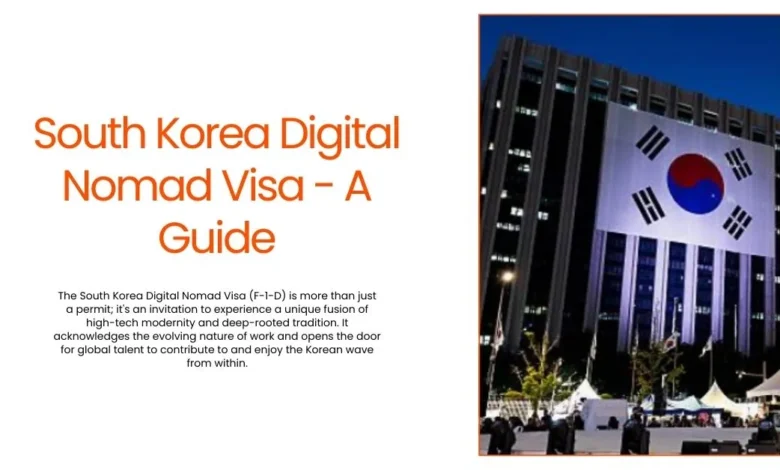
South Korea’s Workation visa (F-1-D) lets remote workers, freelancers and entrepreneurs live in Korea while working for overseas employers or clients. It allows a stay of up to two years — one year plus a possible one-year extension — for applicants with at least one year of professional experience, annual income of at least KRW 84.96 million (about USD 63,000), and health insurance coverage of KRW 100 million. Applications must be made from outside South Korea.
Compare Asia’s options with our guide to the Japan digital nomad visa for 2026.
Read Also: South Korea Work and Family VISA
Details of South Korea Digital Nomad Visa
Key Points
- Country: South Korea
- Visa Name: Workation visa (F-1-D)
- Who: foreigners who want to work remotely in South Korea and their family (spouse, children)
- How long: maximum 2 years (1 year + 1 year extension possible).
Eligibility Requirements
A related overview covers the South Korea digital nomad (F-1-D) visa requirements.
To qualify for the South Korea Digital Nomad Visa, applicants must meet the following criteria:
- Remote Work Eligibility:
- Must be employed, freelance, or a business owner.
- Work must be for companies or clients outside South Korea.
- Work Experience:
- Minimum of 1 year of professional experience in your current field.
- Income Requirements:
- Must demonstrate an annual income of at least KRW 84.96 million (~USD 63,000), equivalent to KRW 7.08 million per month.
- This threshold is roughly double South Korea’s average GNI per capita.
- Health Insurance:
- Coverage of KRW 100 million is required to ensure medical safety during your stay.
- Application Location:
- Applications must be submitted from outside South Korea. Current residents are not eligible.
Benefits of the South Korea Digital Nomad Visa
- Legal Residency for Remote Work: Live and work in South Korea legally while working for overseas clients or running your business.
- High-Speed Internet & Infrastructure: Stay productive with some of the world’s fastest internet and cutting-edge technology.
- Cultural & Economic Hub: Gain access to a thriving tech ecosystem, vibrant entertainment industry, and rich cultural experiences.
- Strategic Location in East Asia: Ideal for regional networking and travel to Japan, China, and Southeast Asia.
- Immersive Cultural Experience: Explore K-pop, K-dramas, traditional cuisine, and learn Korean firsthand.
- Affordable Living Compared to Global Tech Hubs: Food, transport, and healthcare are reasonably priced, especially outside Seoul.
- Efficient Public Transport: Easy commuting without needing a car.
- World-Class Healthcare: Access high-quality and affordable healthcare services.
- Advanced Technology Exposure: Interact with smart cities, 5G networks, and other innovations daily.
- Vibrant Co-Working & Startup Ecosystem: Collaborate, network, and grow in dynamic workspaces.
Required Documents
Applicants typically need:
- Valid passport
- Proof of stable remote income (tax returns, bank statements)
- Employment verification or freelance/business documentation
- Health insurance coverage of KRW 100 million
- Completed visa application form
- Additional documents may be requested by the embassy
How to Apply
- Identify Your Local Korean Embassy or Consulate: Applications must be submitted from your home country.
- Prepare All Required Documents: Ensure proof of income, work experience, and insurance coverage is complete.
- Submit Application: Follow the guidelines provided by your embassy or consulate.
- Wait for Approval: Processing times may vary depending on your location.
Why Apply for the South Korea Workation Visa?
The Workation Visa (F-1-D) is perfect for:
- Freelancers seeking a legal work setup abroad.
- Entrepreneurs exploring business opportunities in South Korea.
- Remote employees looking for an immersive international experience.
This visa enables you to experience South Korean culture, live in a modern city, and work remotely legally, all without a local job offer.
How to Apply for the South Korea Workation Visa (F-1-D)?
- Getting a South Korean Workation Visa (F-1-D) can be done in different ways based on where you live. This is a list of South Korea’s foreign posts. Choose your country and call the office to find out how to get a work visa.
- What the South Korean Ministry of Foreign Affairs said in an official statement is shown below.
- Source: Ministry of Foreign Affairs
- Digital Nomad Visa South Korea (View Online)
Conclusion:
Learn about the Workation Visa (F-1-D), a new program from the South Korean government that lets freelancers and people who work from home live and work in South Korea even if they don’t have a job offer. Find out about the standards, benefits, and application process, as well as the documents and foreign posts that are needed. You should not miss the chance to experience life in South Korea while still working from home. Apply now to become a digital nomad in South Korea and start a trip you’ll love!
If you would rather be hired locally, read the South Korean work visa guide for job seekers.
Cost of Living in South Korea for Digital Nomads
What income do I need for the South Korea digital nomad visa?
You must show annual income of at least KRW 84.96 million — roughly USD 63,000, or KRW 7.08 million per month. That threshold is about double South Korea’s average GNI per capita. Income must come from remote work for companies or clients outside South Korea; you cannot work for a Korean employer on this visa.
Can my family join me on the South Korea Workation visa?
Yes. The Workation visa (F-1-D) covers the applicant plus their spouse and children, so your family can live with you in South Korea for the duration of your stay. Each family member will need to meet the standard documentation and health insurance requirements for the application.
Can I apply for the Workation visa from inside South Korea?
No. Applications must be submitted from outside South Korea — current residents are not eligible to switch to this visa from within the country. You should apply early through the Korean embassy or consulate in your home country, well before travelling.
How long can I stay on the South Korea digital nomad visa?
The visa grants an initial stay of up to one year, with a possible one-year extension, for a maximum of two years in total. That makes it one of the longer digital nomad options in Asia, giving remote workers real time to settle in cities like Seoul, Busan or Jeju.
Browse jobs in South Korea with visa sponsorship for foreigners for sponsored roles.
Families should also see the South Korea work and family visa application process.




2 Comments