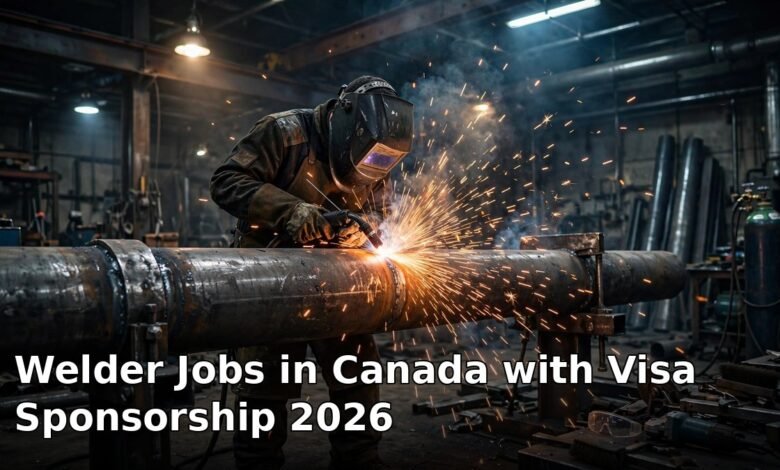
Certified welders are among the most in-demand skilled tradespeople in Canada, and in 2026 fabrication shops, pipeline contractors, and manufacturers across Ontario, Alberta, British Columbia, and Saskatchewan continue to sponsor foreign welders through LMIA-backed visa sponsorship. From pressure pipe welding to structural fabrication, employers are paying premium rates for welders who can pass a weld test and read complex drawings.
Trades workers have a dedicated immigration stream too — see our Federal Skilled Trades Program eligibility guide for 2026 before you apply.
Welder Jobs in Canada: 2026 Overview
Welders (NOC 72106) join, cut, and shape metal for construction, oil and gas, shipbuilding, mining, and manufacturing projects across Canada. The strongest demand in 2026 is for pressure welders, pipe welders (GTAW/TIG specialists), structural welders, fabricators, and boilermakers. Recent Job Bank and Indeed postings show openings such as stainless steel piping fabricators in Ontario, field welders in Alberta and British Columbia, and B-pressure welders on remote mining projects with camp accommodation and travel provided.
Many employers hire through LMIA-approved postings that explicitly state the company holds approved LMIA permits, meaning the sponsorship pathway is built into the offer. Provincial Nominee Program streams for skilled trades can also fast-track experienced welders toward permanent residence.
Salary and Pay for Welders in Canada
Welder jobs in Canada with visa sponsorship typically pay CAD $28 to $45 per hour, with certified pressure and pipe welders earning the most. A recent stainless-steel piping posting in Cambridge, Ontario advertised $30 to $45 per hour with overtime paid after 40 hours per week, while a B-pressure welder role on a Northwest Territories mining project paid a base rate of $45.25 per hour with camp accommodation and travel.
That translates to roughly CAD $58,000 to $94,000 per year at full-time hours, and remote-project welders can exceed CAD $90,000 with overtime, allowances, and rotational schedules such as 14 days on and 14 days off. Most roles include dental and extended health care, life insurance, and paid time off.
For the full permit process behind any sponsored trade job, see our Canada work permit guide for 2026.
Requirements and Qualifications
Canadian employers offering visa sponsorship to foreign welders generally require:
- A recognised welding certificate, with CWB (Canadian Welding Bureau) qualification to CSA W47.1 a strong advantage — GTAW/TIG experience is mandatory for pipe welding roles.
- Proficiency in multiple processes: SMAW, GMAW (MIG), FCAW, and GTAW (TIG), in all positions.
- At least 2 to 5 years of documented welding experience, with pressure welding certificates (such as B-pressure or Class A) required for pipeline and vessel work.
- The ability to read and interpret blueprints, isometric drawings, weld maps, and welding procedure specifications (WPS).
- The ability to pass an employer weld test, plus basic English and a clean safety record.
A Red Seal welder endorsement is a major advantage and is required by some employers, particularly for fabrication and pressure work in Western Canada.
Visa Sponsorship Route: LMIA, TFWP, and the Federal Skilled Trades Program
The most common route is the Temporary Foreign Worker Program: your Canadian employer secures a positive LMIA from ESDC (the employer pays the CAD $1,000 fee), and you then apply to IRCC for an employer-specific work permit (CAD $155). Some postings openly state that the company already holds approved LMIA permits for the role, which speeds up hiring considerably.
Welders also have a dedicated permanent-residence stream: the Federal Skilled Trades Program under Express Entry, which rewards valid job offers or certificates of qualification in eligible trades. Provincial Nominee Program trade streams in Ontario, Alberta, and British Columbia are another proven route from a sponsored job to PR.
How to Apply for Welder Jobs with Visa Sponsorship
Use these channels to find genuine sponsored openings:
- Search Job Bank Canada for ‘welder’ and filter by ‘LMIA requested’ or ‘open to international applicants’.
- Search Indeed Canada for ‘welder LMIA’ or ‘welder visa sponsorship’ and look for postings that mention approved LMIA permits.
- Target large fabrication and energy employers with international hiring track records, and apply through their career pages or licensed recruitment agencies.
- Prepare a Canadian-format resume (one to two pages, no photo) leading with your certifications, processes, and quantified project experience.
Keep your certificates, weld-test records, reference letters, passport, and police clearance ready — employers move fastest with candidates whose documents are complete.
Tips to Increase Your Chances
Get your credentials assessed early: a CWB ticket or Red Seal endorsement dramatically improves your profile with Canadian employers. Record a short video of your welding technique if possible, and keep copies of every certification and weld-test result.
Watch for scams — legitimate employers never charge you for LMIA processing. Verify every offer against the company’s official website and confirm the LMIA details before signing anything.
Apply Now
Employer: NV Piping Systems Inc.
Apply Now: check the current opening for a Pipe Welder at NV Piping Systems Inc., Cambridge, Ontario — the company holds approved LMIA permits.
Frequently Asked Questions
How much do welders earn in Canada in 2026?
Welders in Canada typically earn CAD $28 to $45 per hour, which is roughly $58,000 to $94,000 per year at full-time hours. Certified pressure and pipe welders earn the most — one recent mining-project posting paid a base rate of $45.25 per hour with camp accommodation and travel, plus overtime.
What visa route lets foreign welders work in Canada?
Most foreign welders arrive through the Temporary Foreign Worker Program: the employer obtains a positive LMIA from ESDC, then you apply to IRCC for an employer-specific work permit. Welders also have a dedicated PR stream — the Federal Skilled Trades Program under Express Entry — plus trade streams in several Provincial Nominee Programs.
What qualifications do I need to weld in Canada?
Employers typically ask for a recognised welding certificate, proficiency in GTAW (TIG), SMAW, GMAW (MIG) and FCAW in all positions, 2 to 5 years of documented experience, and the ability to read blueprints and pass a weld test. CWB qualification to CSA W47.1 and a Red Seal endorsement are strong advantages, and pressure work requires B-pressure or Class A certification.
How do I apply for welder jobs in Canada with visa sponsorship?
Search Job Bank Canada and filter by ‘LMIA requested’, search Indeed Canada for ‘welder LMIA’ or ‘welder visa sponsorship’, and prioritise postings that state the company holds approved LMIA permits. Use a Canadian-format resume leading with certifications and processes, and keep all certificates and reference letters ready.
Welder jobs in Canada with visa sponsorship in 2026 pay excellent rates and offer a clear route from a sponsored work permit to permanent residence through the Federal Skilled Trades Program. If you are a certified welder ready to pass a weld test, your skills are in demand right now. Apply now and start building your Canadian career.