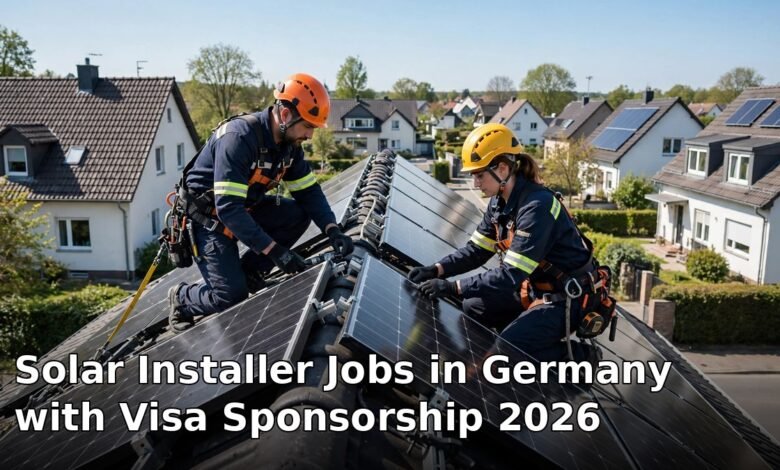
Solar installer jobs in Germany with visa sponsorship 2026 are one of the few trade routes where the law itself names the occupation: Germany’s Skilled Immigration Act explicitly lists solar installers in its short-term contingent employment provision — no vocational degree required for that route. With Germany chasing a 200,000+ worker gap for the Energiewende, solar companies are recruiting installers from abroad at record pace. A note on sourcing: no live German solar listing with verified international-hiring wording could be confirmed at write time, so salary figures in this guide are indicative ranges. This guide covers the named-in-law contingent-employment route, indicative pay and benefits, the long-term recognition partnership and Opportunity Card pathways, and how to apply properly.
New to Germany’s immigration rules? Read how to clear Germany work visa eligibility first — it explains the embassy requirements, document standards and language expectations every applicant must meet.
What Do Solar Installers Do on German Rooftops and Solar Parks?
Solar installers mount photovoltaic panels on residential rooftops, commercial buildings and open-land solar parks across Germany. The daily work means carrying and fitting panels on mounting rails, fitting brackets and clamps, supporting wiring and inverter connections, and testing installed systems — much of it at height, in harnesses, to strict German electrical and fall-protection rules. Entry helpers learn on site (no experience required), while electrical or roofing skills push you into better-paid installer and lead-technician roles. Day-to-day briefings and safety checks are given in German, which is why basic language ability matters so much on these crews.
The Named-in-Law Route: Short-Term Contingent Employment for Solar Installers
Here is the fact that makes this route unusually credible: Germany’s Skilled Immigration Act created a short-term contingent employment provision that EXPLICITLY names solar installers — and wind technicians — among the peak-season occupations it covers. No vocational degree is required for this route, contracts run for up to 8 months, the employer covers your travel costs, and the job needs approval from the Federal Employment Agency with a contract of at least 30 hours a week. Germany is racing to install solar at record pace under the Energiewende, with a projected gap of more than 200,000 workers — so this named-in-law route exists precisely because the demand is real. For the same reason, also check the jobs in Germany with visa sponsorship guide for how German employers handle international hiring generally.
Compare with the same trade overseas in our solar panel installer jobs in Canada with work visa permit guide.
See the broader picture in work visa sponsorship jobs in Germany.
Planning the long game? Our Germany Opportunity Card guide explains the points route for job-seekers.
Get your paperwork embassy-ready with how to clear Germany work visa eligibility.
Salary and Benefits: Indicative Ranges for Solar Installers in Germany
No live German solar listing with confirmed international-hiring wording could be verified at write time, so treat the figures below as market indications, not promises: roughly €2,200 a month for entry solar helpers, around €2,600 for PV installers, about €2,900 for senior installers and up to roughly €3,300 for lead or electrical installers — with overtime on top. As a registered German worker you get statutory health insurance, 20–30 days of paid annual leave plus public holidays, and accommodation support from many employers. Whatever an ad says, the only figure that matters is the gross pay written in your German employment contract — never accept “we will top it up later” promises from anyone.
Long-Term Routes: Recognition Partnership and the Opportunity Card
Contingent employment gets you in the door, but the long game runs on two established pathways. The recognition partnership lets a German employer hire you while your foreign trade qualification is formally recognised in parallel — practical for installers with electrical or roofing credentials. The Opportunity Card (Chancenkarte) gives a points-based way to come and job-hunt for up to a year, and Germany’s Energiewende shortage is exactly the kind of demand it is designed for. Both expect real German ability — plan for B1. Read our Germany Opportunity Card guide to see how the points system scores qualifications, language and experience before you plan the switch.
How to Apply for Solar Installer Jobs in Germany with Visa Sponsorship 2026
Shortlist genuine German solar installation firms, rooftop specialists and solar-park developers — not agents promising “guaranteed visas” — and apply with a German-format CV (two pages, no photo) that states clearly that you need employer-supported visa processing. Prepare scanned copies of your passport, CV, police clearance certificate, and any electrical, roofing or solar certificates (these raise your pay band). State plainly that you are comfortable working at height and safety-focused. If an agent demands a recruitment fee, walk away and report them: real German recruitment costs the applicant nothing. Check how to clear Germany work visa eligibility so your documents are embassy-ready before the first interview.
Frequently Asked Questions
Which German visa route covers solar installers without a vocational degree?
Short-term contingent employment under Germany’s Skilled Immigration Act. This provision explicitly names solar installers (alongside wind technicians) for peak-season work of up to 8 months, requires no vocational degree, and needs Federal Employment Agency approval. It is the fastest legal entry route for the trade.
Do I need to speak German to work as a solar installer in Germany?
It is strongly expected. Most German solar crews operate in German, and height plus electrical safety briefings are given in German. Aim for at least A2 level for the contingent route and B1 if you want the long-term recognition partnership or Opportunity Card pathway.
What salary do solar installers earn in Germany in 2026?
Indicative ranges seen on recent German solar postings run about €2,200 a month for entry helpers up to roughly €3,300 for lead or electrical installers, with overtime paid extra. These are market indications, not a guaranteed figure — always confirm pay in the written German employment contract.
Can the short-term solar route lead to permanent residence in Germany?
Not directly — it is a temporary route. But it gets you in, building German work experience and employer contacts. For the long term, the recognition partnership (recognition of your trade qualification alongside a job offer) and the Opportunity Card for job-seeking are the established pathways to a lasting German career.
Solar installer jobs in Germany with visa sponsorship 2026 are one of the few trade routes where the law itself is on your side — short-term contingent employment explicitly names solar installers, needs no vocational degree, and puts the travel cost on the employer. Chase the 200,000+ Energiewende worker gap with a strong, safety-first CV, push your German toward B1, and treat the contingent route as your entry ticket and the recognition partnership or Opportunity Card as the long-term plan. Apply through real German employers and never pay anyone a fee for a job offer.